Xizang (Tibet) Autonomous Region: A Dream Destination Like No Others
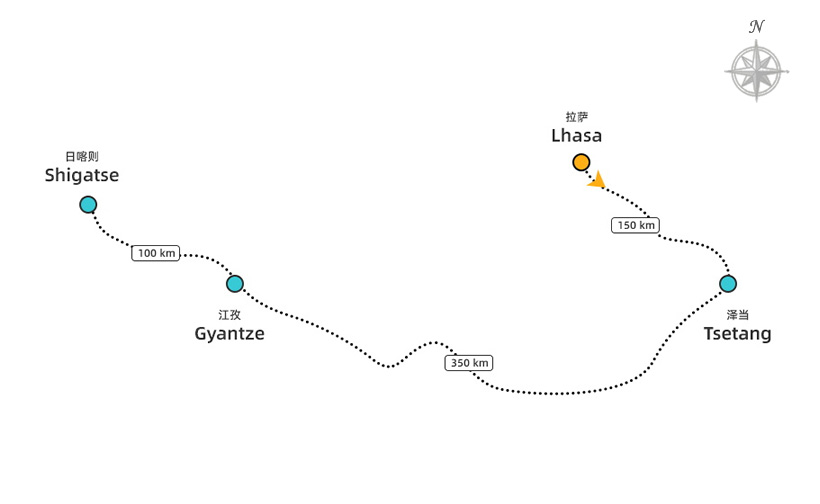
Lhasa > Tsetang > Gyantze > Shigatse
Recommended tour length: 7 days
Recommended entry city: Beijing, Shanghai or Chengdu
Recommended departure city: Beijing, Shanghai or Chengdu
Best time to visit: May to October
Day 1-3: Lhasa
Worshipped as the Holy Land in Tibetan Buddhism, Lhasa is the capital of Xizang (Tibet) Autonomous Region. At an altitude of 3,658 metres, the city has more than 3,000 hours of sunshine every year on average, so it is known as China’s “City of Sunshine”.
Recommended excursions and experiences:
Potala Palace (UNESCO World Heritage Site, national 5A-level tourist attraction)
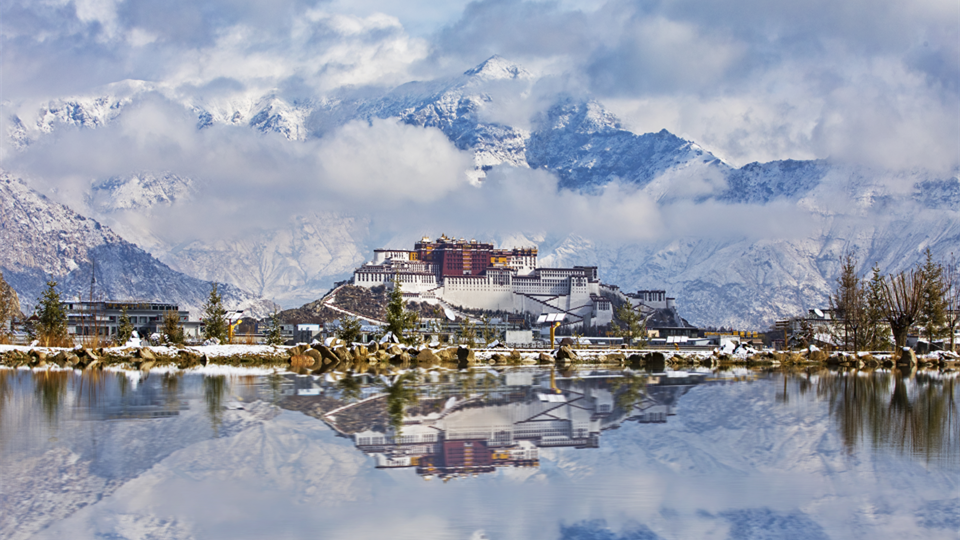
Standing on top of Red Hill in the north-west of the Lhasa city region, the Potala Palace is a grand Tibetan palace complex that remains the largest and most intact ancient palace in Xizang (Tibet) Autonomous Region today. Behaviours that are taboo in Tibetan Buddhism, such as wearing a hat inside, taking photos and stepping on doorsills, should be avoided during any visit. Advance booking is required.
Jokhang Temple (UNESCO World Heritage Site, national 5A-level tourist attraction)
With a history of more than 1,300 years, Jokhang Template is a Tibetan Buddhist monastery nestled in the old part of Lhasa. Having housed almost all key Buddhist events, the temple is often called the “Eye of Xizang (Tibet) Autonomous Region”. Thanks to its extremely high status in Buddhism, the temple is frequented by pilgrims and worshiped with burning incense all year long. It is circled in a clockwise direction every day by a steady stream of believers who kneel with devotion in front of the main entrance on a stone floor imbued with the marks of the visits of the thousands of pilgrims who have come before them.
Barkhor Street
The Jokhang Temple is located in the Barkhor neighbourhood and the street around the temple is called Barkhor Street, which means “eight corner street”. Initially a normal road around the temple, it has gradually become the route by which many pilgrims circumambulate the monastery in prayer and one of Lhasa’s most important commercial streets. Lined on both sides with shops selling religious wares in various sizes as well as all kinds of daily necessities, it is a fantastic place to shop, try local snacks, and check out the variety of goods on offer.
Norbulingka (UNESCO World Heritage Site, national 4A-level tourist attraction)
Built from the 1740s, this palace was the summer retreat of successive Dalai Lamas. The palace boasts a classical Tibetan garden planted not only with trees and flowers commonly found in Lhasa, but also with rare species taken from the southern and northern slopes of Himalayas or introduced from mainland China and abroad, giving rise to its reputation as a “botanic garden on the plateau”. During the annual Shoton Festival, performers from various different schools of Tibetan opera gather here to give a grand performance. City residents will bring their families to the park, where they will put up tents, lay out barley wine and a variety of local dishes, and celebrate with song and dance for one week.
Sera Monastery
This monastery together with Drepung Monastery and Ganden Monastery are jointly known as the “great three monasteries of Lhasa”. This tranquil place has seen a succession of eminent monks and living Buddha give lectures about Buddhist scriptures ever since its completion in 1419. Sera Monastery is particularly known in the Tibetan region for its daily scripture debates, which remain one of its main draws. The monastery has developed its own distinctive style in terms of the level of occasion, code of gestures as well as intensity, and is a fascinating ritual to watch.
Did you know: Scripture debates are a way of learning Buddhist doctrine. Lamas illuminate doctrines and test religious and philosophical understanding through the debates. The debate session is usually carried out within a shady open space in a temple. During the debate, the monks engage in an intense battle of words and often use various gestures to increase the power of their position. For example, they may clap their hands to urge their opponents to respond as soon as possible or pull on Buddha beads to draw support from the Buddha and vanquish their opponent.
Drepung Monastery
Drepung Monastery is the largest of the six monasteries of the Gelug School of Tibetan Buddhism and today houses tens of thousands of antiques and historical books. Each hall of the monastery is home to an expressive and carefully sculpted statue from a different period, which represent the highest level of sculpture craftmanship in Xizang (Tibet) Autonomous Region, and the murals in each hall are brightly coloured with bold lines. All of the works here are of great historical, religious and artistic value in Xizang (Tibet) Autonomous Region. A gigantic portrait of Buddha on a thangka (a Tibetan Buddhist painting on cotton) is unfolded in the sun each year at Drepung Monastery during the Shoton Festival.
Travel from Lhasa to Tsetang
Distance: Approximately 150 kilometres, 2.5 hours by car
Day 4: Tsetang
Located in the prefecture-level city of Shannan, Tsetang is the birthplace of the Tibetan ethnic group and Tibetan culture. The town is also home to the first Tibetan palace and the first monastery to ordain tonsured Tibetan monks.
Recommended excursions and experiences:
Samye Monastery (national 4A-level tourist attraction)
The first monastery to ordain Tibetan tonsured Tibetan monks, this monastery blends Tibetan, Han and Indian architectural styles and is known as “the monastery of three styles”. The Buddha statues in the main hall vary in form but have the same solemnity, while the exquisite mural paintings demonstrate the wisdom and artistry of the ancient Tibetans. Visitors who ascend to the top of the neighbouring Hapori Mountain at dawn or dusk can gain a seemingly infinite panoramic view of the Samye Monastery and the Brahmaputra River.
Yumbu Lakhang
Dating back more than 2,000 years, Yumbu Lakhang was the first palace and one of the earliest structures in Xizang (Tibet) Autonomous Region. The palace has witnessed times and dynasties change while still retaining its original look and is a good place to learn about the first Tibetan king and early farming in Xizang (Tibet) Autonomous Region.
Travel from Tsetang to Gyantze
Distance: Approximately 350 kilometres, 5-6 hours by car
Day 5: Gyantze
Situated in the south of Xizang (Tibet) Autonomous Region at an average elevation of 4,000 metres above sea level, Gyantze is home to Pelkor Chode Monastery, the only Tibetan Buddhism monastery shared by the Sakyapa, Kadampa and Gelugpa schools of Tibetan Buddhism.
Recommended excursions and experiences:
Pelkor Chode Monastery
Built in 1427 in the classic Tibetan Buddhist temple architectural style, this monastery also includes a unique structure called a kumbum, a pagoda of temples which merge into and complement each other. This monastery is shared by the Sakyapa, Kadampa and Gelugpa schools of Tibetan Buddhism and the white buildings are also home to well-known mural paintings. The paintings cover a wide range of subjects and use a method of drawing that is not found in many other monasteries in Xizang (Tibet) Autonomous Region.
Yamdrok Yumtso
One of the three great sacred lakes in Xizang (Tibet) Autonomous Region along with Lake Namtso and Lake Manasarovar, its Tibetan name translates to “turquoise lake”. Yamdrok Yumtso is the largest continental lake on the northern side of the Himalayas at 675 square kilometres. Sitting at an altitude of 4,441 metres above sea level, the lake is fed by numerous streams flowing down from the snow-capped Nyenchen Tanglha Mountains. The lake itself has no drainage outlet and the volume of the snow-melt water is dynamically offset by evaporation. The lake can turn a myriad of blue hues depending on the light and looks like a sapphire inlaid on the Shannan plateau.
Kharola Glacier
Located at the border of Nagarze County and Gyantze County, and about 71 kilometres away from Gyantze, Kharola Glacier is one of the three largest continental glaciers in Xizang (Tibet) Autonomous Region. This gigantic glacier stretches from a mountain top shrouded in clouds and mist all the way down to just a few hundred metres away from the road.
Travel from Gyantze to Shigatse
Distance: Approximately 100 kilometres, 2 hours by car
Day 6: Shigatse
Occupying the south-western part of Qinghai-Xizang (Tibet) Plateau, Shigatse is one of the most attractive destinations in Xizang (Tibet) Autonomous Region thanks to its ancient culture, grand monastic architecture and spectacular natural landscape.
Recommended excursions and experiences:
Tashi Lhunpo Monastery (national 5A-level tourist attraction)
Tashi Lhunpo Monastery is the largest monastery in Shigatse and the largest Gelug school monastery in the entire region of west Xizang (Tibet) Autonomous Region. Construction was initiated in 1447 and led by first Dalai Lama, Gedun Drupa, a disciple of Je Tsongkhapa, who founded the Gelug school of Tibetan Buddhism. The monastery took 12 years to complete and has been the monastic seat of successive Panchen Lamas since the fourth Panchen. Enshrined in the grand Hall of Maitreya is a gold-plated bronze statue of Jampa Buddha, the casting of which was led by ninth Panchen Lama Thubten Choekyi Nyima in 1914. The statue portrays the Maitreya Buddha in a seated position. The crown of the Buddha is decorated with more than 1,400 precious stones and materials such as diamonds, pearls, amber and coral. The gold used on the body of the Buddha weighs over 335 kilograms while the brass itself weighs 115,000 kilograms, making it the largest bronze Buddha statue in the world.
Travel from Shigatse to Lhasa Gonggar Airport
Distance: approximately 250 kilometres, 3.5-4 hours by car
Day 7: Shigatse to Lhasa Gonggar Airport
Notes:
- There are no international flights from Shigatse. Travellers must return to Lhasa and fly to a major city for departure.
- If departing from Beijing, you can book a direct flight from Lhasa to Beijing (3,500 kilometres, 4 hours). If flying to Shanghai, you’ll need to make a stopover in Chengdu (2,900 kilometres between Lhasa and Shanghai, 5.5 hours including the stopover).
New ways to play in Xizang(Tibet)
The following tours can be added to your trip
Two-day trip to Namtso and Yangpachen Valley from Lhasa
Lake Namtso: Meaning “Heavenly Lake” in Tibetan, Lake Namtso is 222 kilometres and 4-5 hours' drive away from Lhasa. The lake is overlooked by the Nyenchen Tanglha Mountains to the south and bordered by the undulating northern Tibet plateau to the north and north-west. With a surface area of over 1,900 square kilometres and an elevation of 4,718 metres above sea level, it is one of Tibet’s three major sacred lakes. The best time to visit the lake is in July and August. Upon your arrival, you can first walk towards the Nyenchen Tanglha Mountains to enjoy a view of the mountains and lake merging perfectly, a sight that can ease worries and sorrows and bring about a calm inner peace. Next, you can proceed to circle the Zhaxi Peninsula in clockwise direction and appreciate the sunrise and sunset, prayer flags and Mani stones.
Yangpachen Valley
Lying between Lhasa and Damxung and stretching 7,000 kilometres along the fault zone of Nyenchen Tanglha Mountains, this valley is rich in geothermal resources including warm springs, hot springs, near-boiling springs and hot water swamps. In fact, there are so many geothermal resources here that the name Yangpachen is now nearly synonymous with hot spring. China’s first wet steam well was dug here in 1975 and the valley is also home to the world’s highest altitude thermoelectric power plant. Lucky visitors will be able to witness a hot water well eject its steam high into the air, a truly magnificent sight.
Two-day trip to Mount Everest Base Camp from Shigatse
Mount Everest: The highest mountain on earth at a peak altitude of 8,848.86 metres above sea level, Mountain Everest is located 350 kilometres from Shigaste (an 8 hour drive). Straddling the China-Nepal border, the main peak of the Himalayas is divided into two parts: the southern part is in Nepal and the northern part encompassing the summit is in Tingri County, Xizang (Tibet) Autonomous Region, China. The terrain is characterized by extremely steep and abrupt slopes and is incredibly complex, all contributing to the spectacle and magnificence of the mountain.
Mount Everest Base Camp: Located at an elevation of 5,200 metres above sea level at a direct line distance of 19 kilometres from the summit of Everest, this base camp attracts 3,000 mountaineers and over 40,000 visitors annually. The setting off point for mountaineers who wish to conquer the roof of the world, the camp is nestled in a fairly flat valley between two mountains, with Mount Everest standing tall at the end of the depression. The area has been levelled and the camp itself is spacious, with temporary tents spreading out in all directions. The highest-altitude post office was opened here in a tent too, allowing you to send out greetings to all over the world. The tents are carried up in tractors to the base camp every April by local Tibetans and taken down and removed again at the end of September. The area cannot be accessed during the rest of the year as the paths are covered with heavy snow.
Activity: Trekking
Although unable to make it to the peak of Mount Everest, outdoor enthusiasts can still approach the mountain from the base camp of the less-frequented eastern slope and revel in the experience of backpacking along a valley in Himalayan Mountains, accompanied all day long by the awe-inspiring Mount Everest, Mount Lhotse, Mount Makalu and other mountains with peaks over 7,000 metres above sea level. In the twentieth century, the valley was praised by American and British adventurers as “the most splendid valley in the world” and “one of the world’s 10 classic hiking routes”.